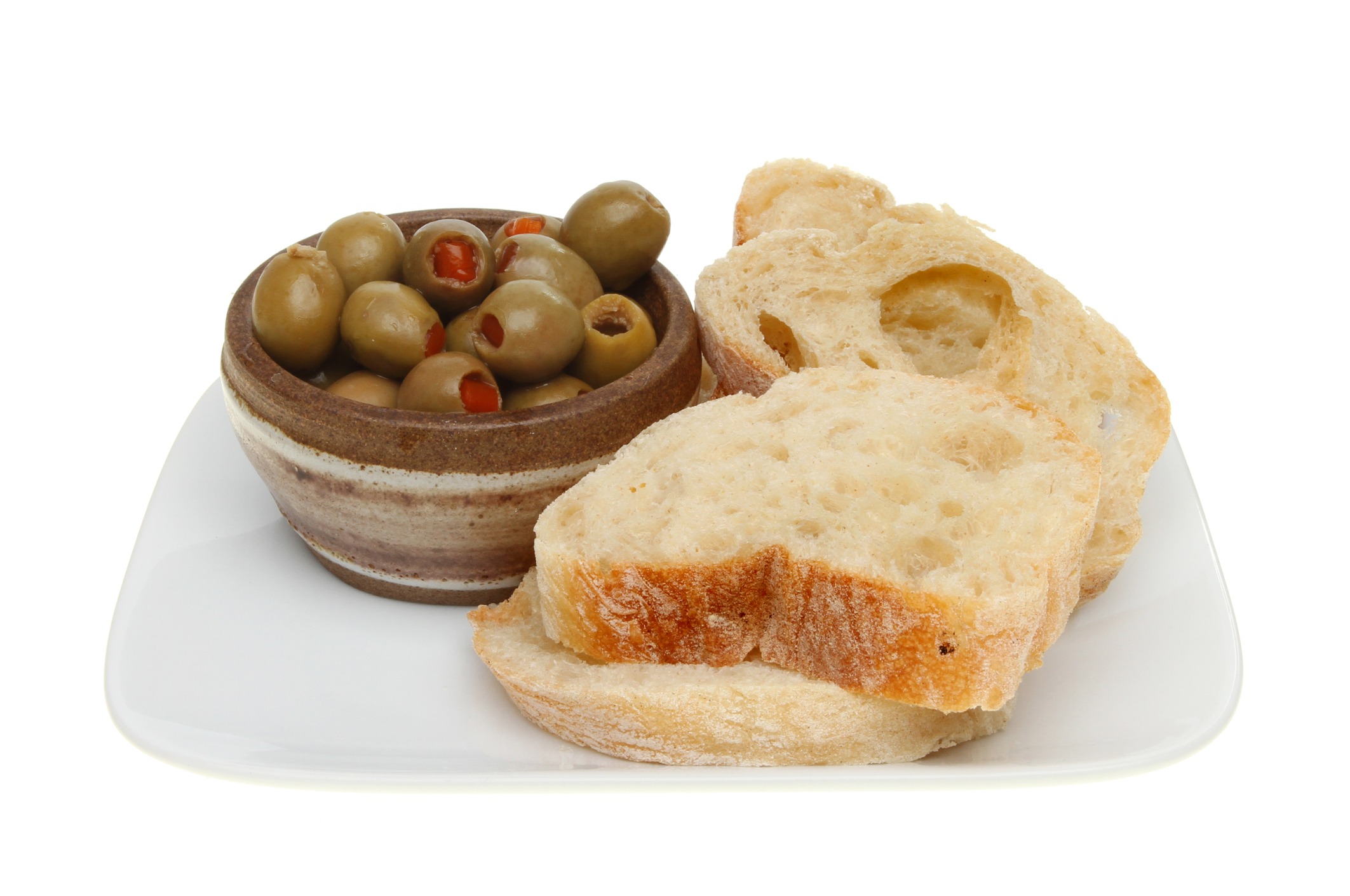
If you’ve ever torn into a loaf of ciabatta bread and loved its crisp crust, chewy texture, and irregular air pockets, you’ll appreciate how satisfying it is to make this rustic Italian bread at home. This recipe takes a little planning because the sponge needs to rest overnight, but the extra time helps develop the flavor and texture that make homemade ciabatta so good.
The dough is very wet and sticky, which is exactly what you want for homemade ciabatta bread. A stand mixer does much of the work, first bringing the ingredients together and then kneading the dough until it becomes smooth and shiny. After that, the dough gets several gentle folds during the rising process rather than being heavily kneaded by hand.
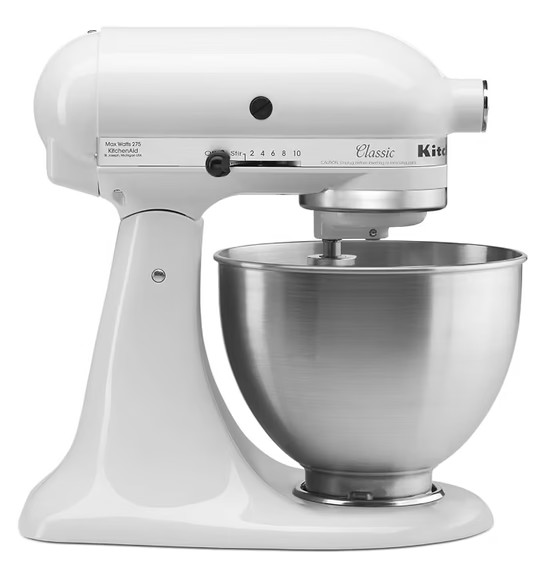
KitchenAid 4.5 Quart Tilt-Head Stand Mixer
10 Speeds, Durable Metal construction, 59 Touchpoints for Thorough Mixing, Compatible with all KitchenAid Attachments.
A bench scraper is especially useful when making ciabatta. The dough is intentionally sticky and delicate, so a bench scraper makes it much easier to divide and shape the dough without adding excessive flour or handling it more than necessary. It’s one of those inexpensive baking tools that becomes surprisingly useful once you start making bread regularly.
The other key to great ciabatta bread is creating plenty of steam in the oven. Baking the loaves on a preheated baking stone and adding steam during the first few minutes helps produce that deeply golden, crisp crust while allowing the bread to rise properly. The finished loaves are chewy, airy, and filled with the irregular holes that are characteristic of good ciabatta.
Once cooled, homemade ciabatta makes an excellent sandwich bread, but it’s just as good torn into pieces and served alongside soup or dipped in olive oil. It can also be sliced and toasted for bruschetta or used for hearty Italian-style sandwiches.
If you’ve wanted to try making ciabatta bread at home, this recipe is a rewarding baking project. It takes some patience and careful handling, but the rustic loaf that comes out of the oven is well worth the effort.
Not exactly what you are looking for? Try these other excellent bread recipes: Potato-Sour Cream Biscuits, fresh baked French Bread or some Dinner Rolls.
Print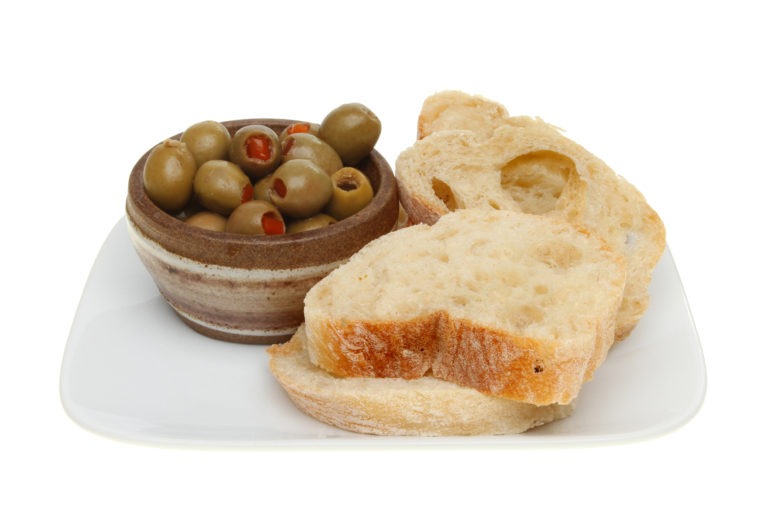
Ciabatta Bread
An excellent recipe for Ciabatta Bread – soft, chewy homemade bread is so good.
- Total Time: 7:70
- Yield: 2 1x
Ingredients
For the Sponge
- 1 cup all-purpose flour
- 1/8 teaspoon instant (rapid-rise) yeast
- 1/2 cup water, at room temperature
For the Dough
- 2 cups all-purpose flour
- 1 1/2 teaspoons salt
- 1/2 teaspoon instant (rapid-rise) yeast
- 3/4 cup water, at room temperature
- 1/4 cup whole or 2% milk, at room temperature
Instructions
- Make the Sponge: Combine the flour, yeast and water in a medium bowl and stir with a wooden spoon until a uniform mass forms. Cover the bowl tightly with plastic wrap and let stand at room temperature for at least 8 hours or up to 24 hours.
- Make the Dough: Place the sponge and the dough ingredients (flour, salt, yeast, water and milk) in the bowl of a stand mixer fitted with the paddle attachment. Mix on low speed until combined and a shaggy dough forms, about 1 minute, scraping down the bowl and paddle as needed. Increase the speed to medium-low and continue mixing until the dough becomes a uniform mass that collects on the paddle and pulls away from the sides of the bowl, 4 to 6 minutes. Change to the dough hook and knead the bread on medium speed until smooth and shiny (the dough will be very sticky), about 10 minutes.
- Transfer the dough to a large bowl, cover tightly with plastic wrap, and let rise at room temperature until doubled in size, about 1 hour.
- Spray a rubber spatula or bowl scraper with non-stick cooking spray. Fold the dough over itself by gently lifting and folding the edge of the dough toward the middle. Turn the bowl 90 degrees, and fold again. Turn the bowl and fold the dough 6 more times (for a total of 8 times).
- Cover with plastic wrap and let rise for 30 minutes.
- Repeat the folding as in step #3, replace the plastic wrap, and let rise until doubled in size, about 30 minutes.
- One hour before baking, adjust an oven rack to the lower-middle position, place a baking stone on the rack and preheat the oven to 450 degrees F.
- Cut two 12×6-inch pieces of parchment paper and dust liberally with flour. Transfer the dough to a floured work surface, being careful not to deflate it completely. Liberally flour the top of the dough and divide it in half with a bench scraper. Turn 1 piece of dough cut-side-up and dust with flour. With well-floured hands, press the dough into a rough 12×6-inch rectangle. Fold the shorter sides of the dough toward center, overlapping them like you would fold a letter in thirds, to form a 7×4-inch rectangle. Repeat with the second piece of dough.
- Gently transfer each loaf, seam-side-down, to the parchment sheets, dust with flour, and cover with plastic wrap. Let the loaves sit at room temperature for 30 minutes (the surface of the loaves will develop small bubbles).
- Slide the parchment pieces with the loaves onto a pizza peel. Using floured fingertips, evenly poke the entire surface of each loaf to form a 10×6-inch rectangle; spray the loaves lightly with water. Slides the loaves and parchment onto the baking stone. Bake, spraying the loaves with water twice more during the first 5 minutes of baking time, until the crust is deep golden brown and the loaves register 210 degrees F, 22 to 27 minutes.
- Transfer the loaves to a wire rack, discard the parchment, and let cool to room temperature for at least 1 hour before slicing and serving. The bread can be wrapped in a double layer of plastic wrap and stored at room temperature for up to 3 days. Wrapped with an additional layer of foil, the bread can be frozen for up to 1 month. To recrisp the crust, thaw the bread at room temperature (if frozen), and place unwrapped bread in 450-degree oven for 6 to 8 minutes.
- Prep Time: :25
- Cook Time: :25
- Category: Bread
- Method: Baking
- Cuisine: Italian