
These Homemade Samosas feature a crisp, golden pastry shell filled with tender potatoes, sweet peas, and aromatic Indian spices. Fried until beautifully golden brown, these savory pastries make a delicious appetizer, party snack, or addition to an Indian-inspired meal.
If you’ve ever enjoyed freshly made samosas at an Indian restaurant, this recipe shows you how to prepare them at home, including the pastry dough, flavorful vegetable filling, and traditional cone-shaped folding method.
The homemade samosa dough begins with all-purpose flour, salt, vegetable oil, and cold water. Optional ajwain seeds add a distinctive, slightly anise-like flavor. Working the oil into the flour before adding water helps create a tender pastry that becomes crisp when fried. After kneading, the dough rests in the refrigerator for at least one hour.
For the filling, russet potatoes are simmered until tender and lightly mashed. Onion, fresh ginger, garlic, and serrano chiles are blended into a fragrant paste, then cooked with black mustard seeds, cumin seeds, garam masala, and turmeric.
Cooked peas, fresh lemon juice, and chopped cilantro finish the filling, adding sweetness, brightness, and fresh herbal flavor to complement the warm spices.
Each portion of dough is rolled into a circle, cut in half, and shaped into a cone. The cones are filled with the potato mixture and carefully sealed before frying.
A deep-fry thermometer is especially helpful for maintaining the recipe’s recommended oil temperature of 365°F. Proper temperature control helps the pastry cook evenly and develop a crisp exterior.
Fry the samosas in small batches for approximately five minutes, until golden brown. Transfer them to a paper towel-lined baking sheet to drain before serving.
This recipe makes 20 samosas, making it a great choice for sharing with family and friends. Serve them warm with tamarind sauce or your favorite chutney for dipping.
With their flaky, crisp pastry and warmly spiced potato filling, these homemade potato and pea samosas are a satisfying way to bring the flavors of Indian cooking into your kitchen.
Related Recipes:
Print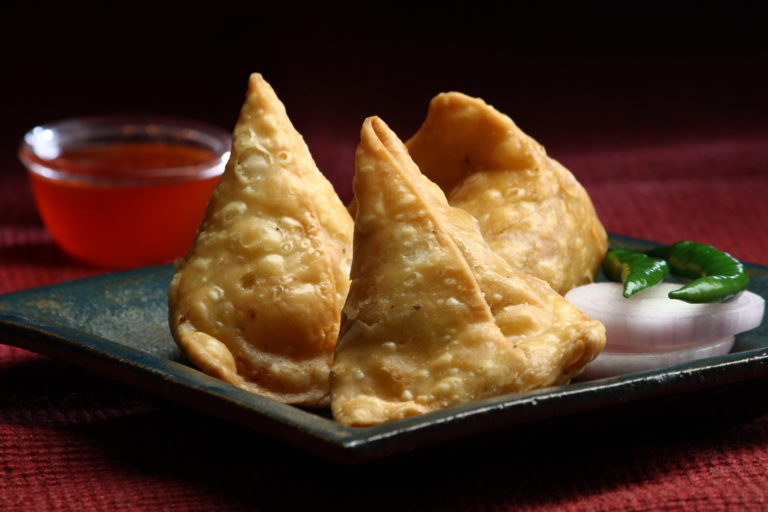
The Best Samosas
- Total Time: 2:45
- Yield: 20 1x
Ingredients
Dough:
- 3 cups all-purpose flour (see Notes)
- 2 teaspoons ajawain (optional, see Notes)
- 3/4 teaspoon fine salt
- 9 tablespoons vegetable oil, plus more as needed
- 3/4 cup cold water
Filling:
- 4 russet potatoes (about 2 pounds), peeled and cut into 1-inch pieces
- Kosher salt, as needed, plus 1 tablespoon
- 1/2 medium yellow onion, chopped
- One 1 1/2-inch piece fresh ginger, peeled and chopped
- 4 cloves garlic
- 2 small or 1 1/2 medium serrano chile (with seeds), stemmed
- 3 tablespoons water
- 3 tablespoons store-bought or homemade ghee or oil, recipe follows
- 1 teaspoon black mustard seeds (see Notes)
- 1/2 teaspoon cumin seeds
- 1/2 teaspoon garam masala (see Cook’s Note)
- 1 teaspoon ground turmeric
- 1/2 cup cooked peas
- 2 tablespoons freshly squeezed lemon juice
- 1/2 cup fresh cilantro leaves, chopped
- Serving suggestion: Tamarind sauce or your favorite chutney
Ghee
- 1 pound unsalted butter
Instructions
- For the dough: Whisk together the flour, ajawain, if using, and the salt. Add the oil and, using your hands, rub it into the flour mixture until fully incorporated. While stirring with a wooden spoon, gradually add the water, until a shaggy dough is formed. Transfer the dough to a work surface and knead until soft and pliable, about 3 minutes. Rub a little oil, about 1 teaspoon, over the dough, place on a plate and cover with a damp towel. Let the dough rest in the refrigerator for at least an hour or overnight.
- For the filling: Put the potatoes in a medium saucepan, cover with cold tap water by about 2 inches, and season with salt. Bring to a boil, lower the heat, and simmer until tender, about 10 minutes. Drain, transfer to a medium bowl and set aside to cool slightly. Using a fork, slightly smash the potatoes.
- Meanwhile, in a small food processor (mini-chopper), combine the onion, ginger, garlic, chiles, and 1 tablespoon water and puree to a paste.
- Heat the ghee in a large skillet over medium-high heat. Add the mustard and cumin seeds and cook, stirring constantly, until fragrant, about 30 seconds. Add the onion paste, salt, garam masala and turmeric and cook, stirring, until lightly browned, about 4 minutes. Add the potatoes and cook, stirring and mashing lightly with a wooden spoon, until hot, about 2 minutes. Stir in the peas. Remove from the heat and stir in the lemon juice, chopped cilantro and remaining 2 tablespoons water.
- To form the samosas: Divide the dough into 10 portions. Using your hands, roll each portion into a small ball. On a floured work surface, using a rolling pin, roll each ball into a 7-inch wide disc. Cut each disc in half.
- Set a small bowl of water beside you. Working with one dough semi-circle at a time, fold half of the straight edge up to the rounded side and wet its outside edge with a little water. Fold the other half up to form a cone, overlapping it with the other side by 1/4 inch. Press the edges together to form a seal. Hold the cone in one hand and fill it with about 1/4 cup of the potato filling. Slightly wet the inside of the rounded edge and fold it over the filling to enclose it. Press the edges together to seal. Repeat with the remaining dough and filling to make 20 samosas.
- In a large, wide heavy-bottomed pot, pour in the oil to a depth of about 2 inches. Place over medium heat, and heat until a deep-fry thermometer inserted in the oil registers 365 degrees F.
- Working in small batches, fry the samosas until golden brown and crispy, about 5 minutes. Using tongs, transfer to a paper towel-lined baking sheet to drain. Serve immediately with tamarind sauce or your favorite chutney.
- For the ghee: Melt the butter in a small saucepan over medium-high heat. Skim off any of the white foam that comes to the surface with a spoon (being careful not to scoop up any yellow fat from the butter) and discard. Lower the heat to medium and simmer until all of the water has evaporated and the white milk solids have browned in the bottom of the saucepan, about 8 minutes.
- Line a sieve with cheesecloth or a coffee filter and pour the butter through into a container. Discard the browned milk solids in the sieve or reserve for another use. Use now or store in the refrigerator for up to 1 week. Yield: about 2 cups
Notes
Tips for Crispy Homemade Samosas
Rest the dough: Refrigerate the covered dough for at least one hour before rolling and shaping.
Avoid overfilling: Use approximately 1/4 cup potato filling per samosa, or slightly less if needed to seal the pastry securely.
Seal the edges carefully: Moisten the pastry edges with water and press firmly to prevent the filling from escaping during frying.
Maintain the oil temperature: Heat the frying oil to 365°F and monitor it between batches. Adjust the heat as necessary to prevent excessive browning.
Fry in small batches: Avoid crowding the pot, which can lower the oil temperature and produce greasy samosas.
Serve immediately: Freshly fried samosas have the crispiest pastry. Serve with tamarind sauce or your favorite chutney.
- Prep Time: :40
- Cook Time: :15
- Category: Appetizer
- Method: Fried
- Cuisine: Indian